


Up to
98%
Infrared Rejection

 Connecticut
Explore Connecticut
Connecticut measures tint rather than judging it by eye. Aftermarket film has to leave at least 35 percent light transmittance, with a three percent tolerance when the DMV takes the reading, and the compliance sticker only goes on once the glass passes. This guide takes you through the limits window by window, what happens when film is too dark, and which Kepler shades sit comfortably inside the rules.

Connecticut settles tint disputes with a meter. An officer who believes your film is too dark can issue a warning ticket, and the vehicle then has to be presented at a DMV inspection lane rather than signed off by a dealer or repairer. The film is measured there, and it passes only if the glass and film together transmit at least 35 percent of light, allowing three percent either way. Getting the shade right at the outset costs a great deal less than stripping film off afterwards.
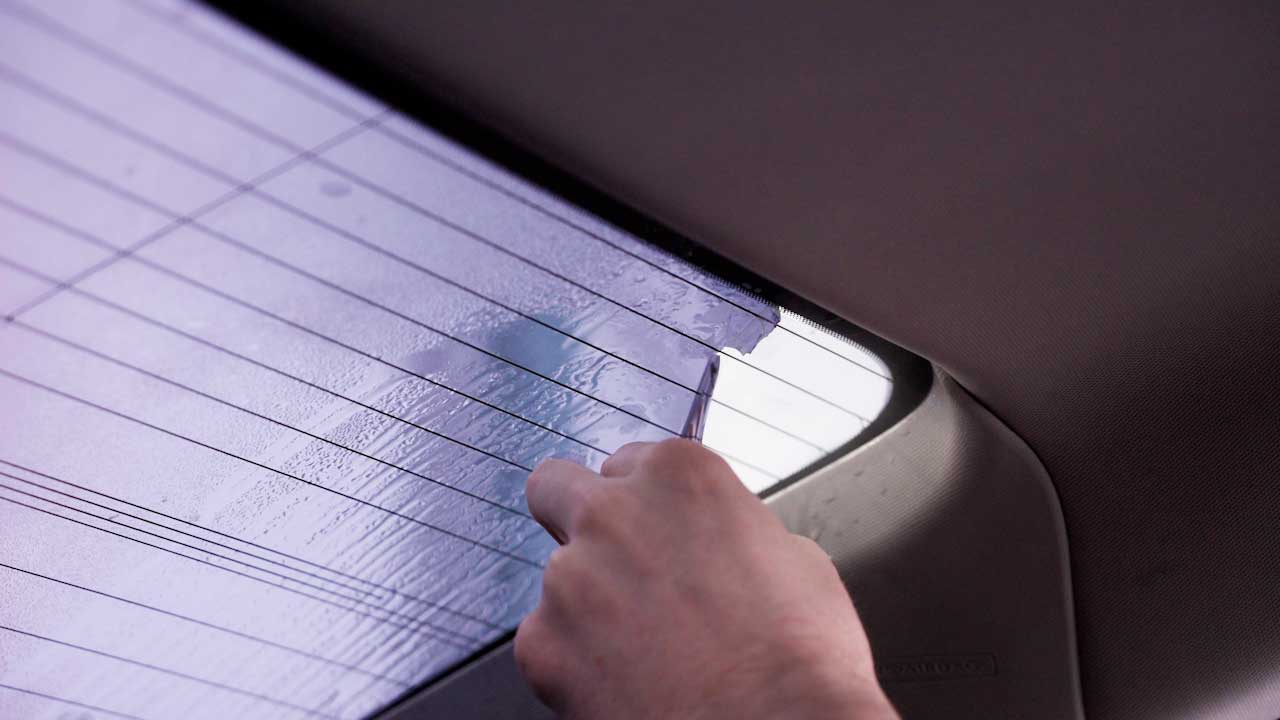
Old film rarely lifts in one piece, the adhesive underneath needs cleaning off, and on a rear screen the defroster lines sit directly beneath the film. Choosing a shade that measures inside the 35 percent limit avoids the job altogether.
Connecticut sets one measured standard and then relaxes it behind the driver. Aftermarket film has to leave at least 35 percent light transmittance, read with a three percent tolerance, and it cannot be more than 27 percent reflective, so nothing turns the glass into a mirror. The rear-most window is treated differently: where a vehicle carries both left and right side mirrors, the light limit does not apply to it. The cards below take each window in turn, for a passenger car and then for an SUV, van or truck, with a slider so you can see what a legal shade actually looks like.
Passenger Vehicles
On a sedan, coupe, hatchback or wagon, the front side windows are the strict ones: film and glass together have to transmit at least 35 percent of light, with the three percent tolerance applied when the DMV measures them. The rear-most window is exempt from that limit where the car has both left and right side mirrors, which is why so many cars run a lighter front and a darker back.
A non-reflective tint / sun strip, is allowed Up to AS1 line as long as it does not go past the AS-1 line on your windshield.
The law allows 35% of light visibility for front side windows.
The law allows 35 of light visibility for rear side windows.
The rear window must allow more than Any Shade of light in
Want a price for your car?
Window Tint Prices (Connecticut)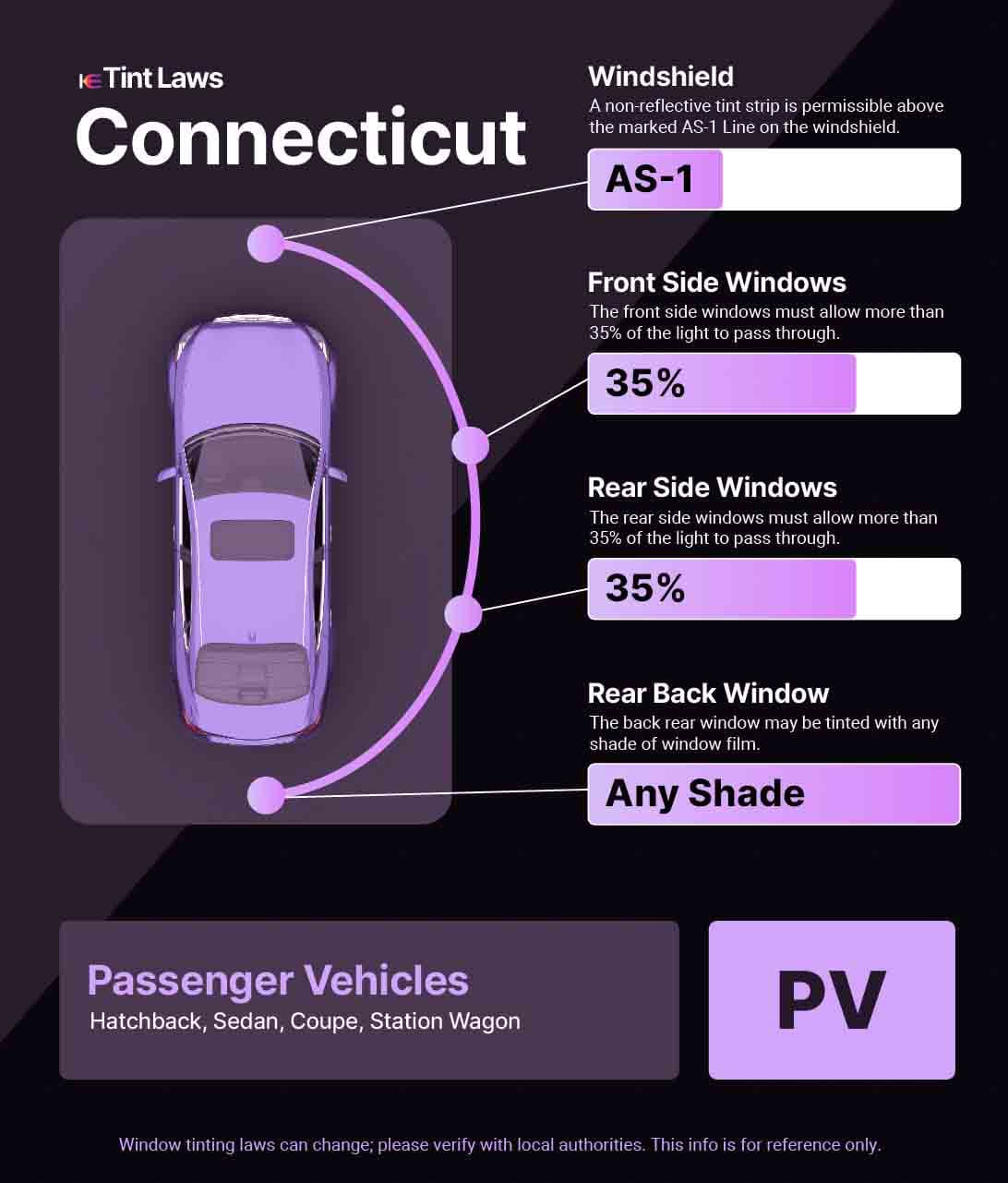
Passenger Vehicles
Hatchback, Sedan, Coupe, Station Wagon
Multi-Purpose Vehicles
Multi-purpose vehicles are identified by the certification label on the driver's door jamb, and Connecticut gives them more room. The windows behind the driver may be tinted as dark as you like, provided the vehicle has both left and right side mirrors, while the front side windows stay on the same 35 percent standard as any car.
A non-reflective tint / sun strip, is allowed Up to AS1 line as long as it does not go past the AS-1 line on your windshield.
The law allows 35% of light visibility for front side windows.
The law allows Any Shade of light visibility for rear side windows.
The law allows Any Shade of light visibility for rear window tint.
Pricing up an SUV, van or truck?
Window Tint Prices (Connecticut)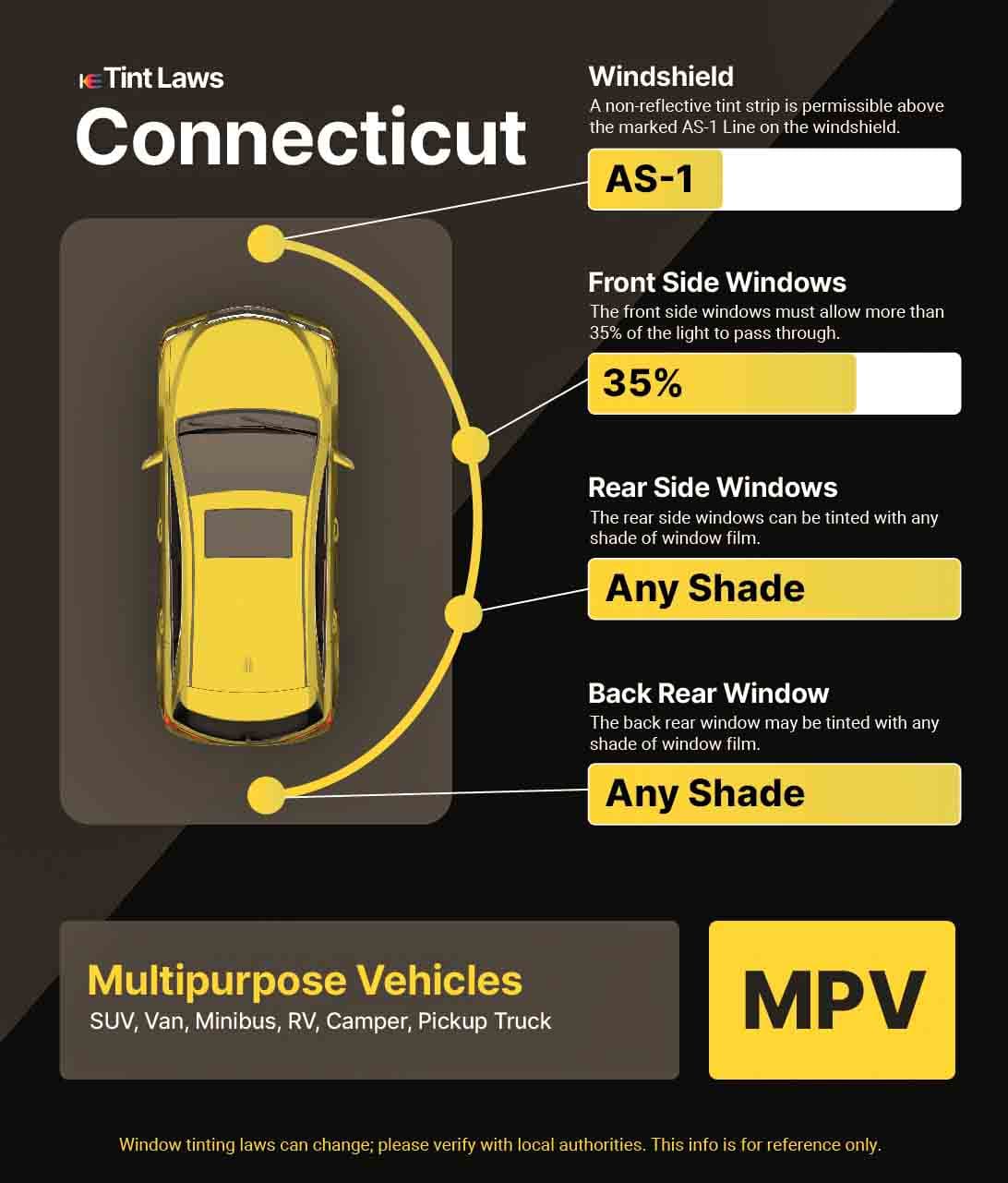
Multi-Purpose Vehicles
SUV, Van, Truck
Summarised from Connecticut DMV guidance in September 2026. Check the current requirement with the DMV, and have the finished glass and film measured, before relying on it.
Kepler IR+ is a metal-free nano-ceramic film whose ceramic particles reject up to 98 percent of infrared heat, so a legal 35 percent shade can still cut the heat. Infrared rejection is not the same measurement as total solar energy rejection, so compare films on the same basis.
Up to
98%
Infrared Rejection
Up to
99%
UV Protection
Up to
96%
Glare Reduction
Review
Warranty terms
Every town below has its own window film page, from Hartford and New Haven to Ballouville and West Suffield. Open the one nearest you to read about tinting in that area, or go straight to the quick quote and your details reach an independent local tinter, who confirms what they can do and when. These pages are a guide to the subject rather than a list of shop addresses.
73 area guides

Gain designed seclusion and refinement with our darkest window film, delivering top-notch refinement and protection.
View our car window films in a never seen before experience with our Kepler 360 Experience - Viewhere.
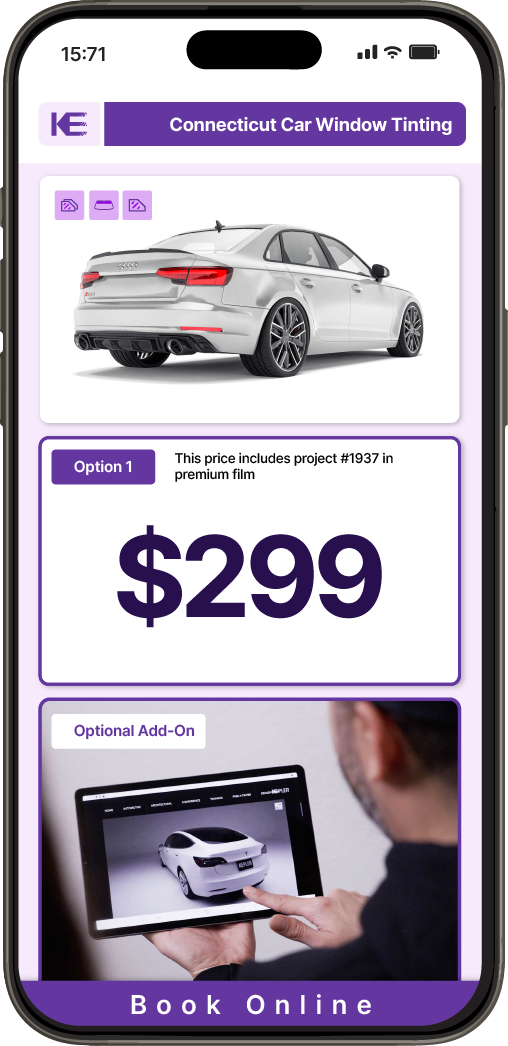
Pick your car make and the shade you like, and the online pricing pages give you an indication to work from rather than a final quote. Send the enquiry through and it goes to an independent local tinter, who confirms the price, the film and the fitting arrangements with you directly.
Find a Local Tinter
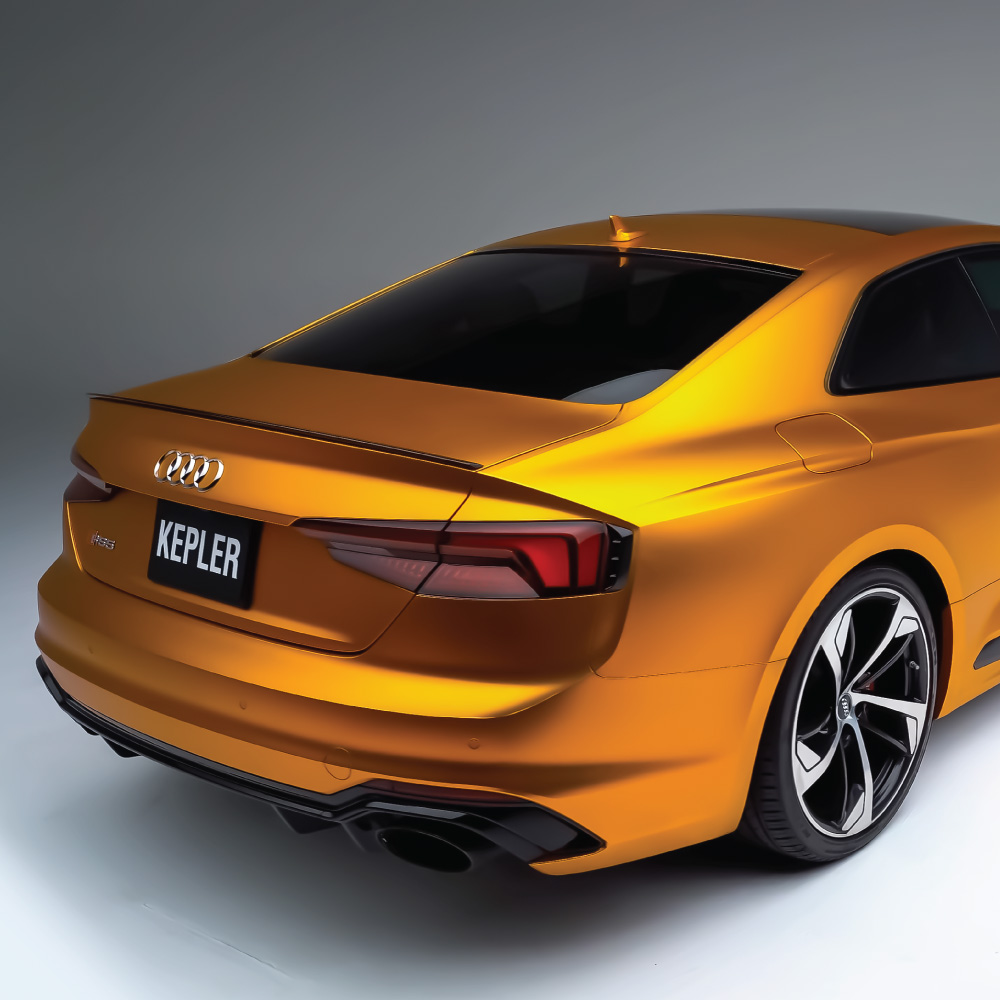
Kepler 360 Experience
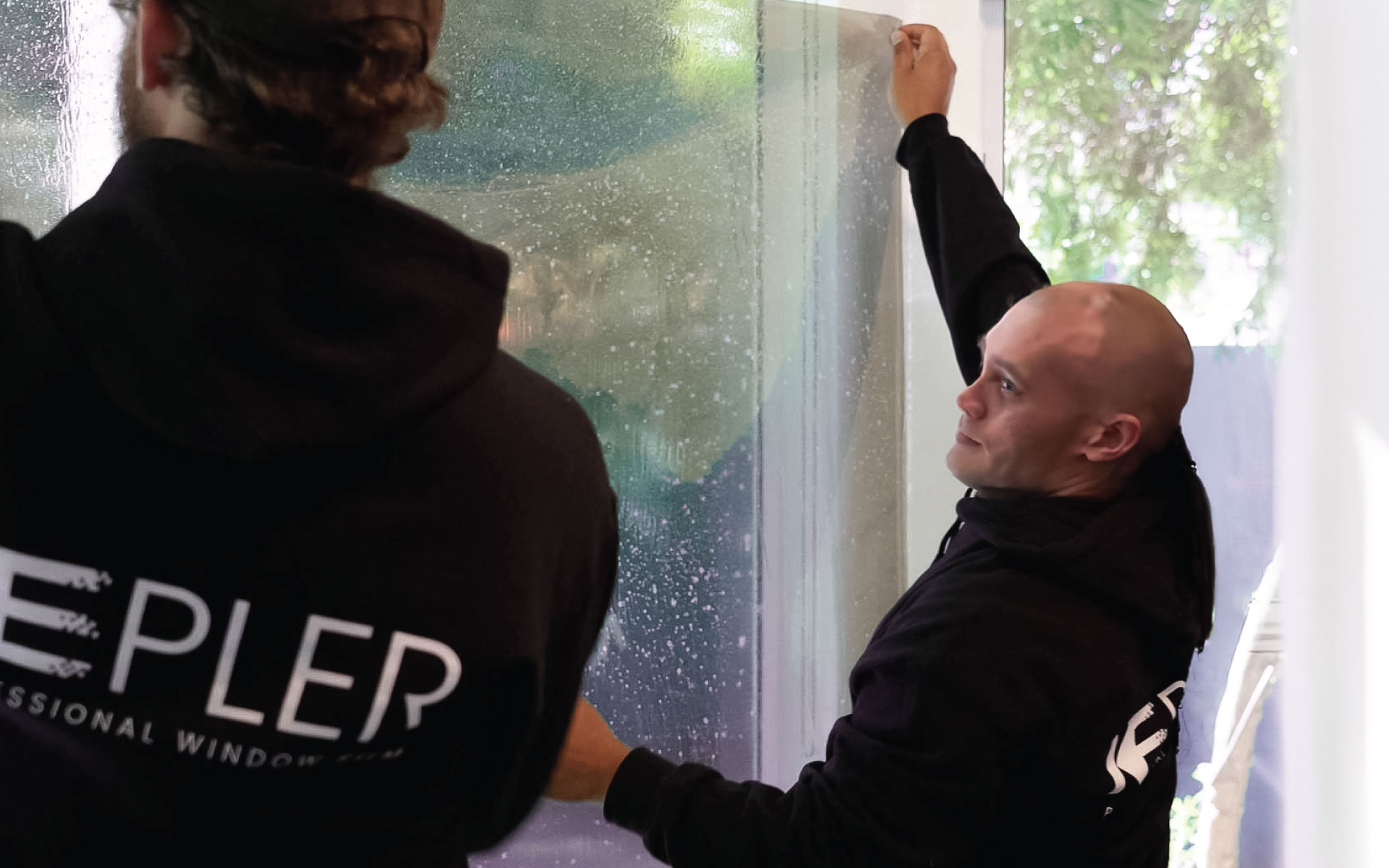
Buildings, Not Just Cars
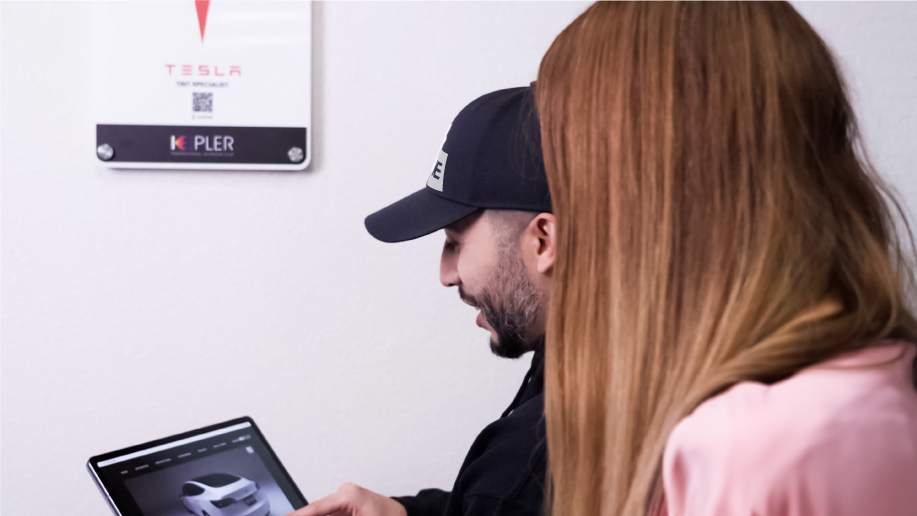
Tesla Owners
Kepler is a film manufacturer, not a tint shop. We supply window film to independent tinting businesses, and those businesses quote for the work, fit the film and look after you from there. It is worth knowing that split before you book: what Kepler stands behind is the film itself, while your dealer agrees the price, the timing and the fitting with you directly.
How Kepler works
Kepler makes the film, not the tint job. Independent tinting businesses install window film. For a project, ask a local tinter whether they carry Kepler film or can get it, then arrange the work directly with that shop.
Start your quote requestFilm availability and installation services vary by independent shop.
Kepler makes automotive and architectural window film, from everyday tint to nano-ceramic.
Independent tinting businesses install window film. Ask a local shop whether they carry Kepler film or can get it.
Share your project details, then ask an independent local tinter whether they carry Kepler film or can get it.
Connecticut deals with over-dark film by measurement. An officer who thinks your film is too dark can issue a warning ticket, and the vehicle then has to be presented at a DMV inspection lane rather than at a dealer or repairer. The tint is measured there and passes only if glass and film together transmit at least 35 percent of light, with a three percent tolerance either way. Film that does not pass earns no compliance sticker, so the practical fix is a lighter shade.
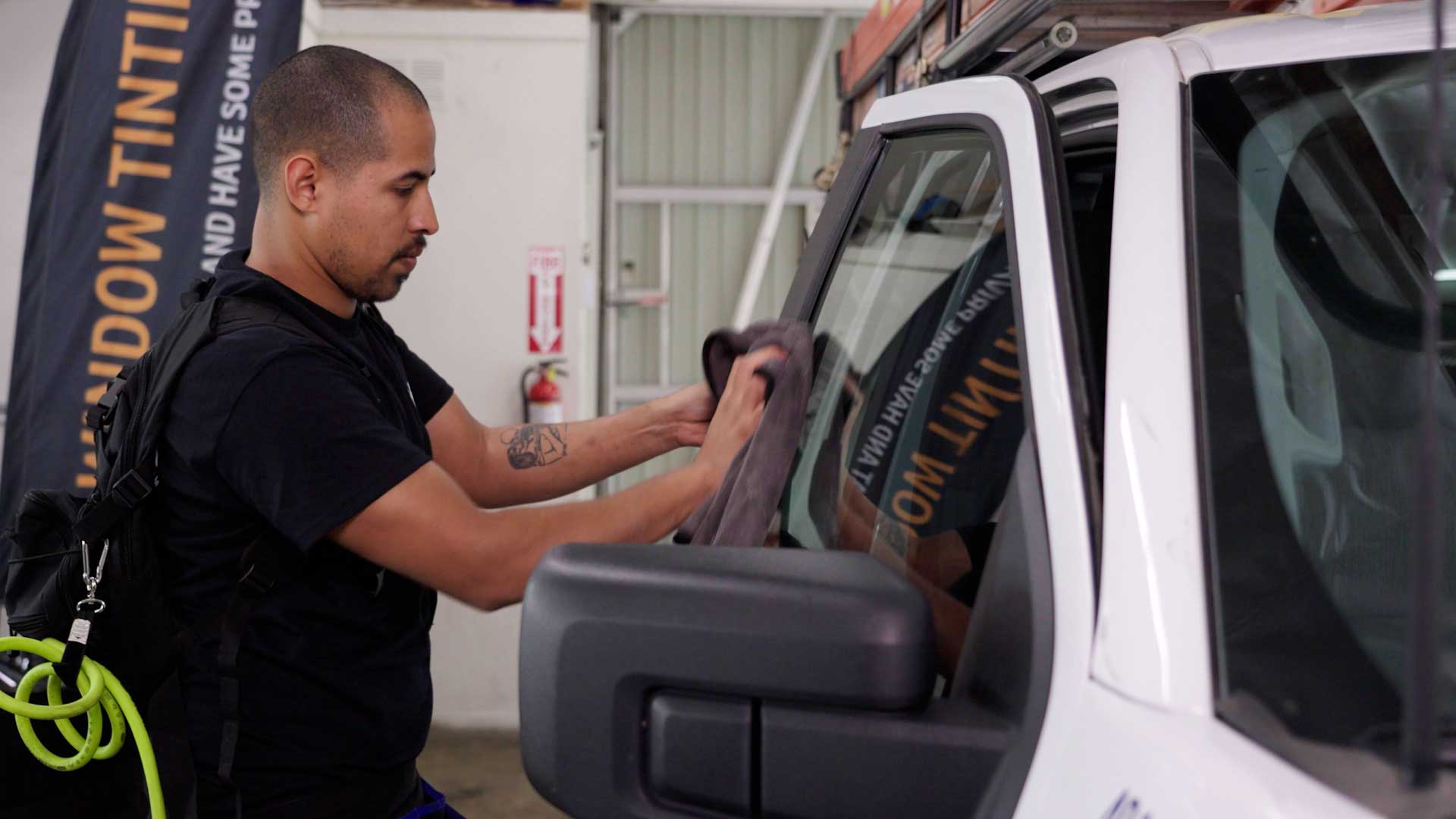
Ask a local tint shop whether they carry Kepler window film or can order it for your installation.
These Google listings are independent businesses. Contact each shop to confirm whether it installs Kepler film; appearing here does not mean it is a Kepler dealer.
Enter your town or ZIP code to find shops close to you.
Maps and business listings are provided by Google. Google Maps terms · Google privacy policy