


Up to
98%
Infrared Rejection

Georgia keeps one headline number for drivers: the windows beside and behind you must still let in at least 32 percent of visible light, plus or minus 3 percent, and film must not push reflectance above 20 percent. This page sets those limits out for passenger cars and for multi-purpose vehicles, explains what a tint offense actually means and how the medical exemption works. Once you know the shade you can legally run, Kepler's film range gives you the heat control without going darker.

Georgia does not treat tint as a paperwork matter. Under O.C.G.A. 40-8-73.1 driving with glass tinted past the limit is a misdemeanor, the rule applies to visitors as well as residents, and a business that installs film below the limit commits the same offense. Settling the shade before the film goes on costs you nothing; settling it afterwards means paying for removal on top of whatever the court decides.
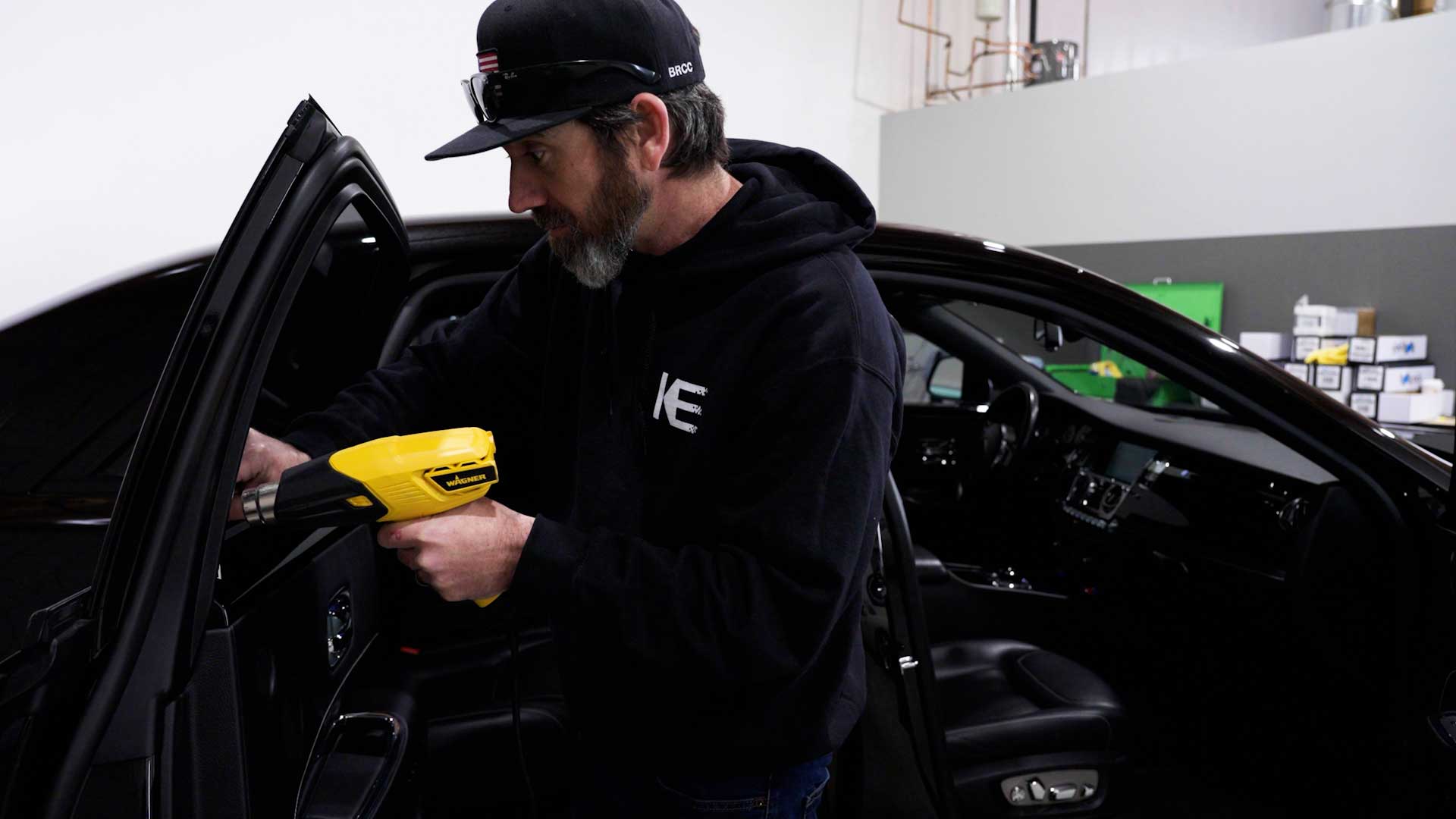
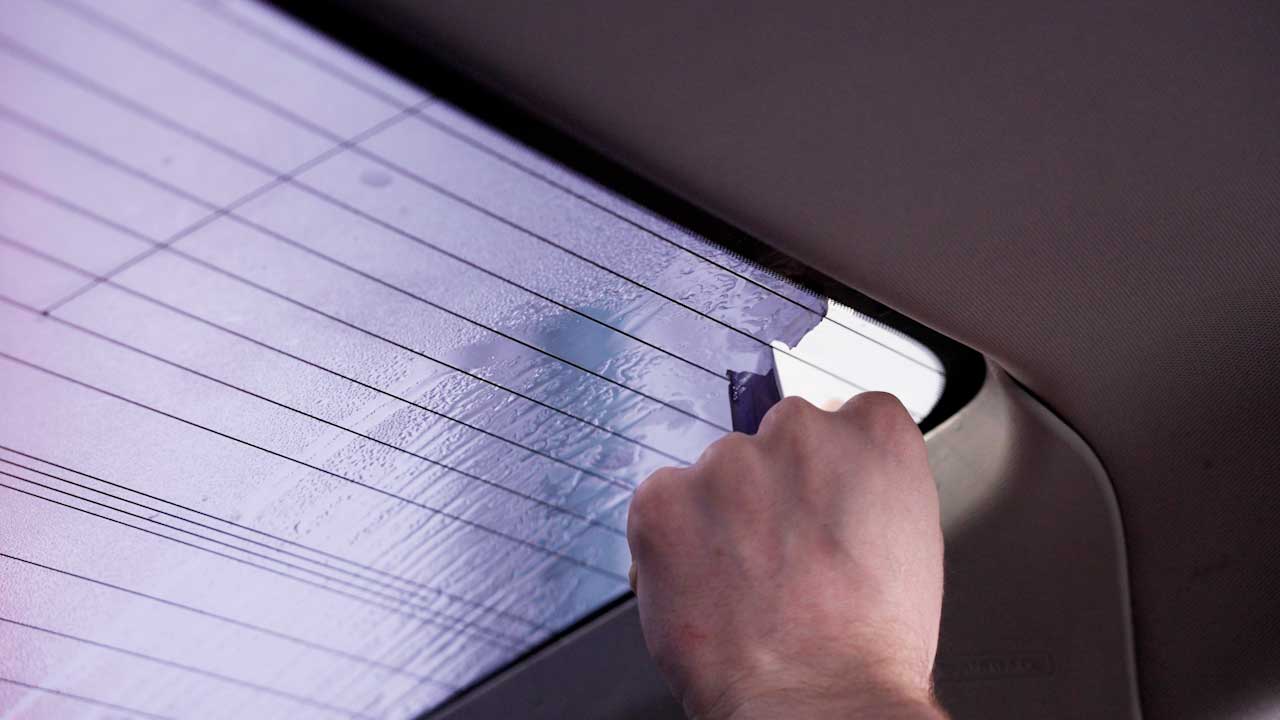
Film removal is slow work: the adhesive lifts unevenly and the rear screen carries defroster lines that careless scraping can ruin. Choosing a Georgia-legal shade in the first place avoids the job altogether.
Georgia sets its limits by vehicle type, so the first question is what you drive. A passenger car has to meet the 32 percent light transmission rule on every window beside and behind the driver, while a multi-purpose vehicle only has to meet it either side of the driver. The two panels below show each window in turn, with a slider so you can see what a legal shade looks like on the glass.
Passenger Vehicles
If you drive a sedan, coupe, hatchback or station wagon, the same 32 percent light transmission limit applies to the front side, rear side and rear windows, and the film must not take reflectance above 20 percent. The windshield itself is not a tinting surface in Georgia beyond a strip along the very top. Open a card to see the darkest legal option on each window.
A non-reflective tint / sun strip, is allowed 6 inches from the top as long as it does not go past the AS-1 line on your windshield.
The law allows 32% of light visibility for front side windows.
The law allows 32% of light visibility for rear side windows.
The rear window must allow more than 32% of light in
Want a price for legal tint on your car?
Window Tint Prices (Georgia)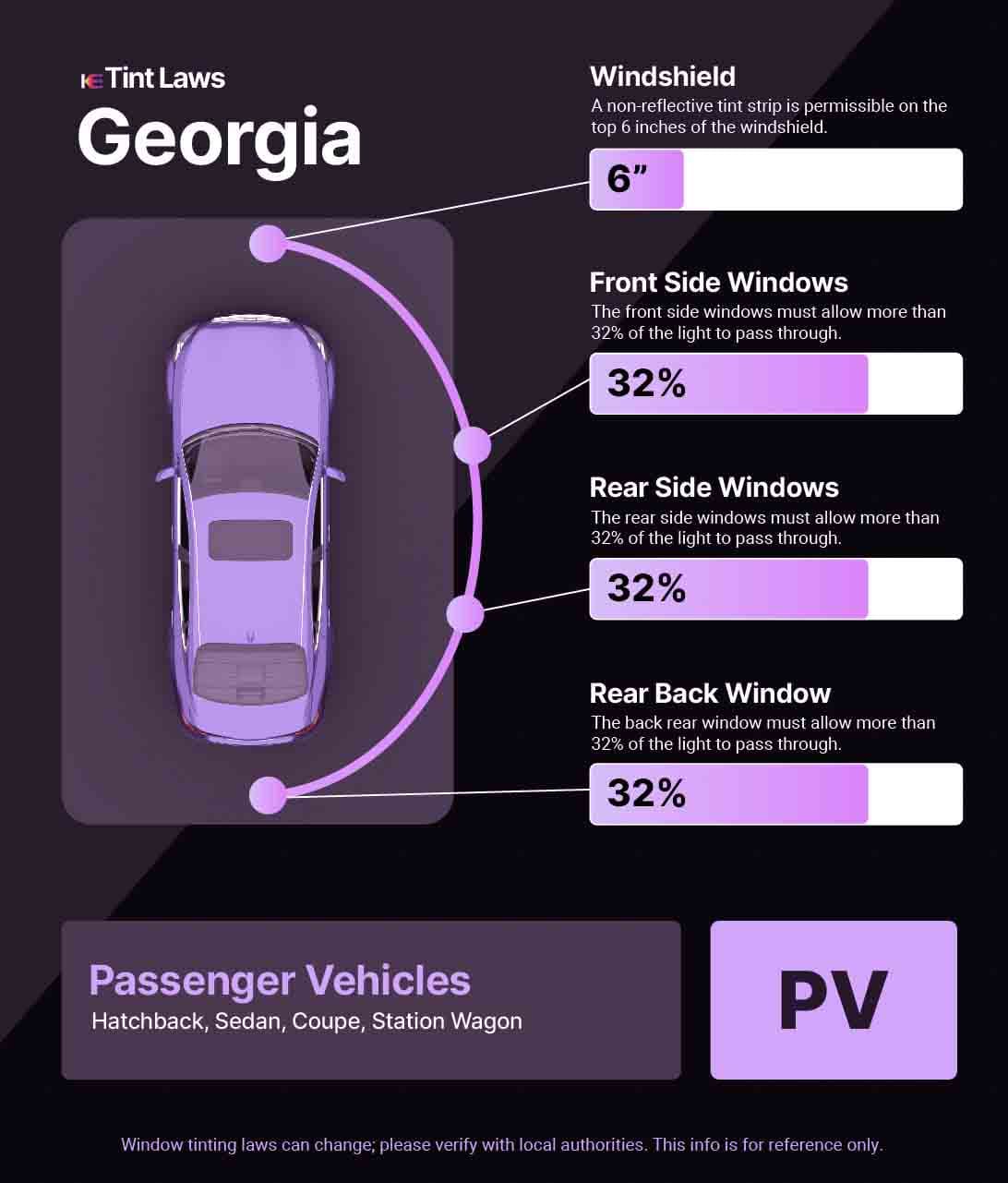
Passenger Vehicles
Hatchback, Sedan, Coupe, Station Wagon
Multi-Purpose Vehicles
Georgia treats a multi-purpose vehicle differently behind the driver: the statute means a vehicle carrying ten people or fewer, built on a truck chassis or with features for occasional off-road use. The windows immediately left and right of the driver still have to meet the 32 percent limit, while the rear side windows and the rear windshield fall under an exception, which is why an SUV or van can run much darker glass in the back.
A non-reflective tint / sun strip, is allowed 6 inches from the top as long as it does not go past the AS-1 line on your windshield.
The law allows 32% of light visibility for front side windows.
The law allows Any Shade of light visibility for rear side windows.
The law allows Any Shade of light visibility for rear window tint.
Pricing a tint for your SUV, van or truck?
Window Tint Prices (Georgia)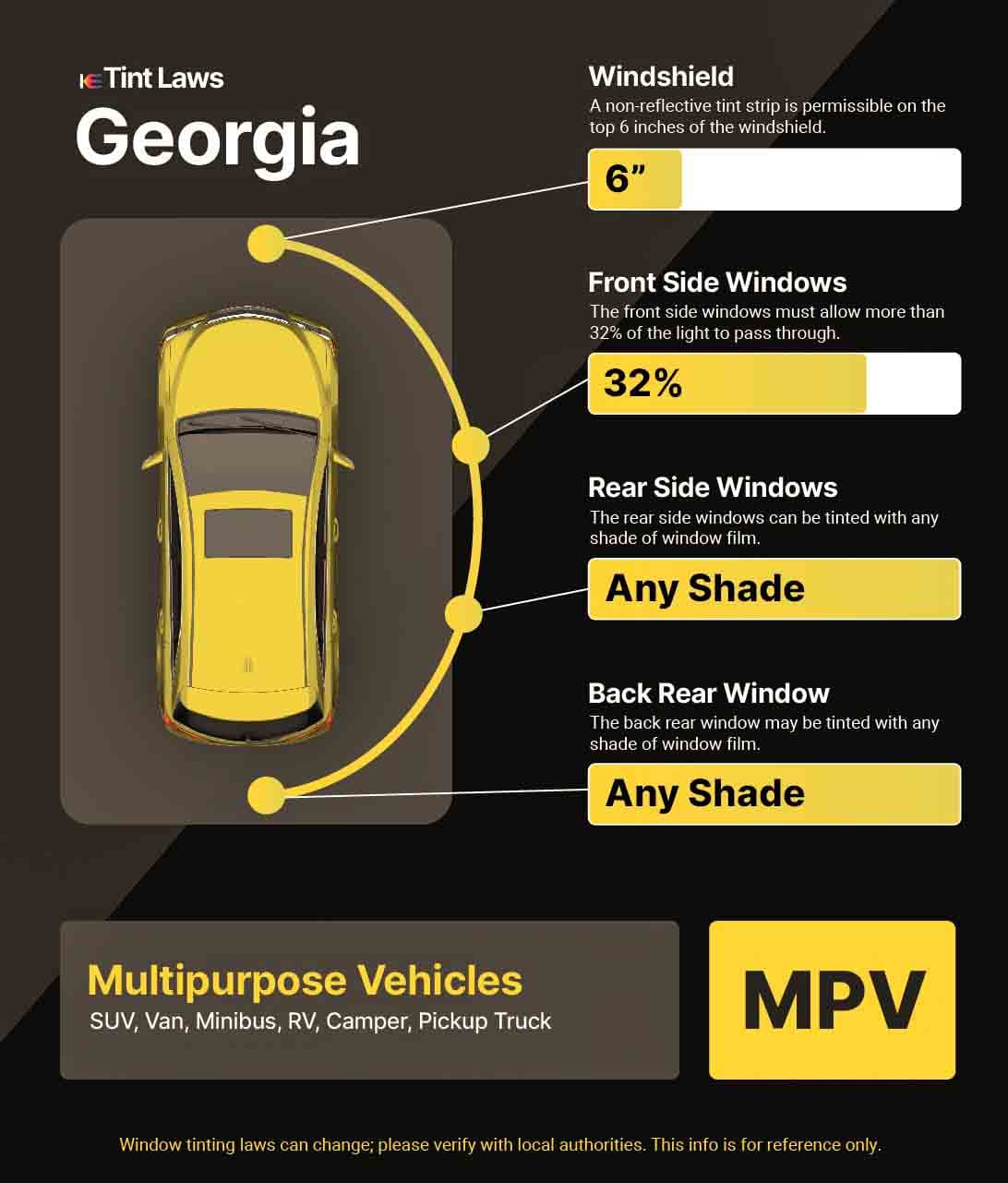
Multi-Purpose Vehicles
SUV, Van, Truck
These limits are Kepler's summary of O.C.G.A. 40-8-73.1. Check the current wording with the Georgia Department of Public Safety, and confirm the finished glass and film combination with your installer, before committing to a shade.
Kepler IR+ is a metal-free nano-ceramic film that works on infrared heat rather than on darkness. Kepler publishes up to 98 percent infrared heat rejection and over 99 percent ultraviolet reduction, so a lighter Georgia-legal shade can still keep the cabin comfortable. Figures vary by shade.
Up to
98%
Infrared Rejection
Up to
99%
UV Protection
Up to
96%
Glare Reduction
Review
Warranty terms
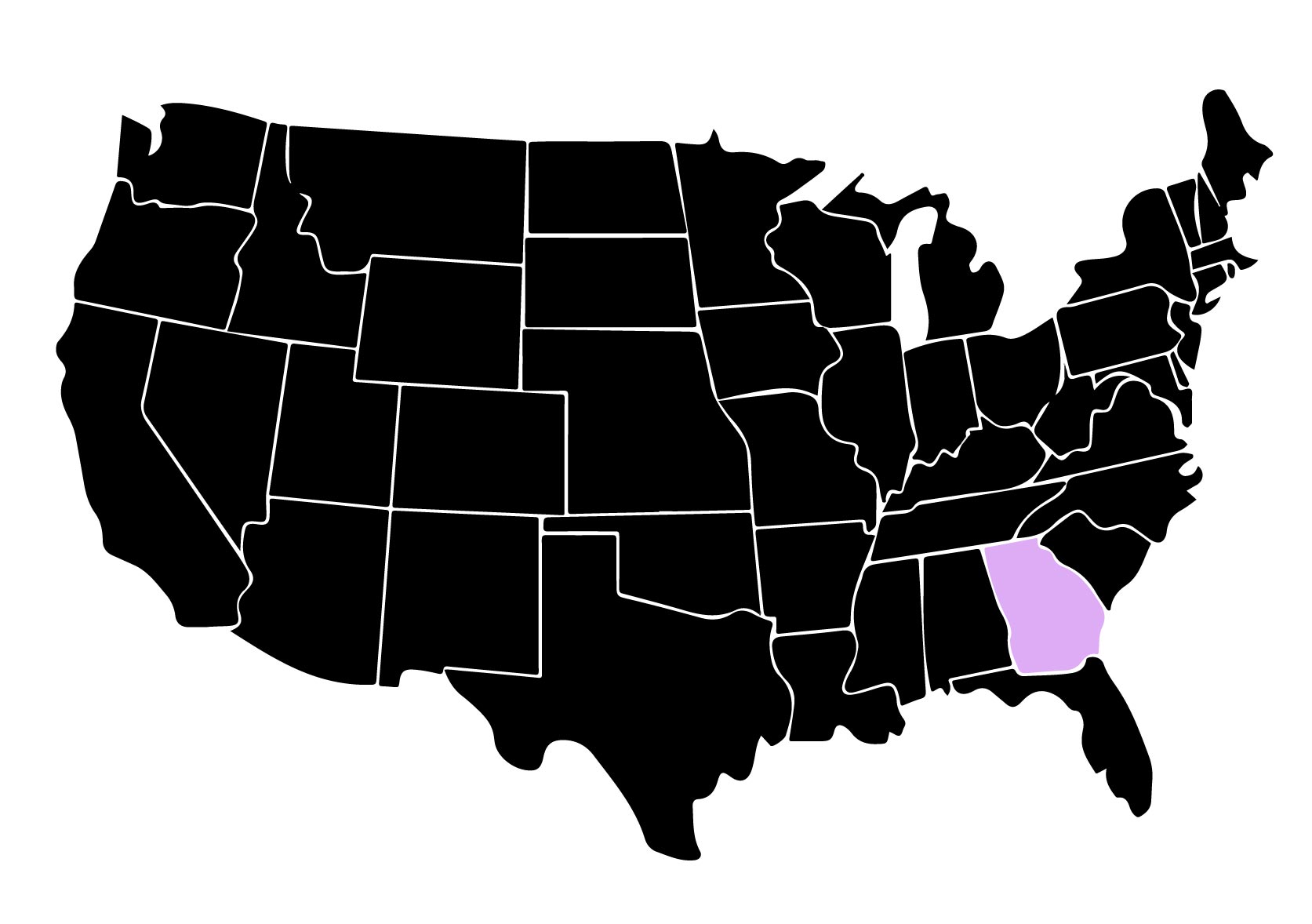
Every Georgia town we cover has its own car window tinting page, from Atlanta and Savannah to Rome and Valdosta. Open the one nearest you to read about the film ranges, or send an enquiry and it goes straight to an independent local tinter, who handles the quote with you from there.
64 area guides

With our darkest window film, relish the pinnacle level of seclusion and class, due to our darkest window film that provides top-notch elegance and protection.
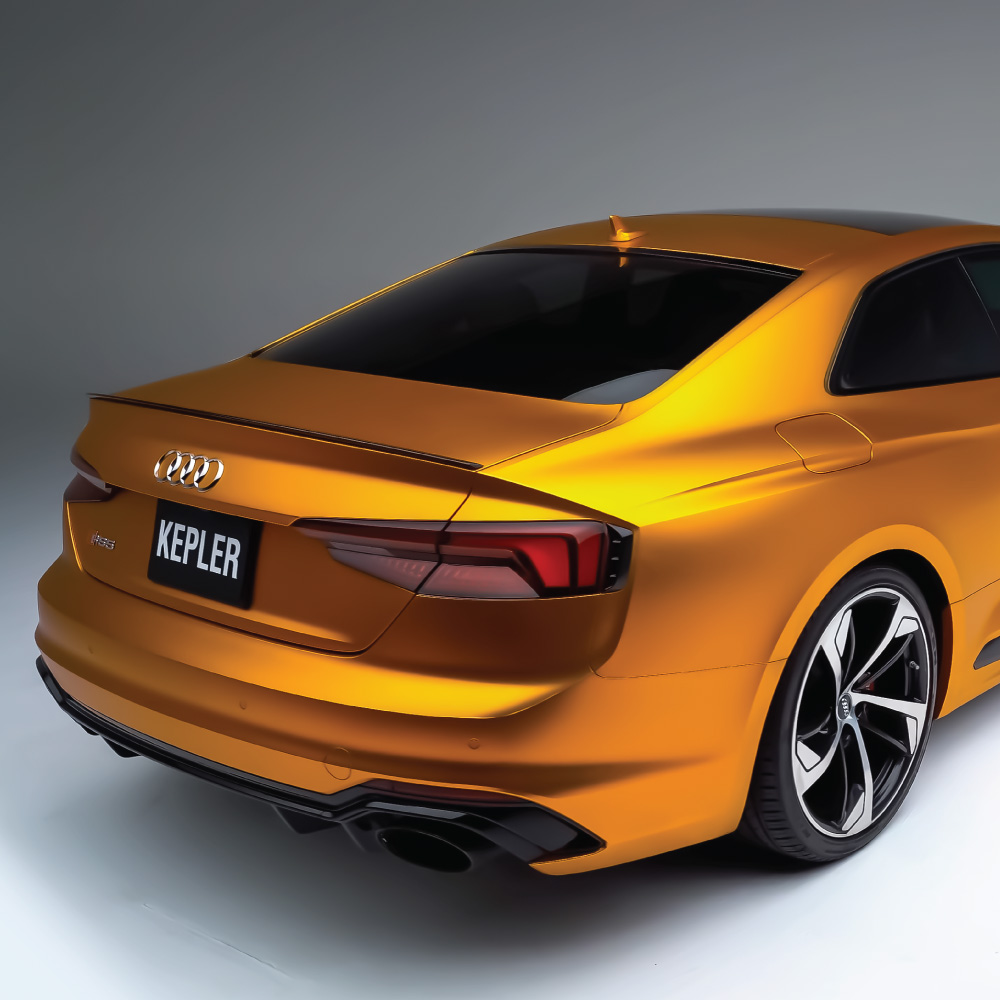
View our car window films in a never seen before experience with our Kepler 360 Experience - Viewhere.
Choose your car make and the online pricing tool gives you a starting point for tinting in Georgia in a couple of clicks. Send the enquiry through and it reaches an independent local tinter, who confirms the film, the price and the fitting arrangements with you.
Find a Local Tinter
Kepler 360 Experience
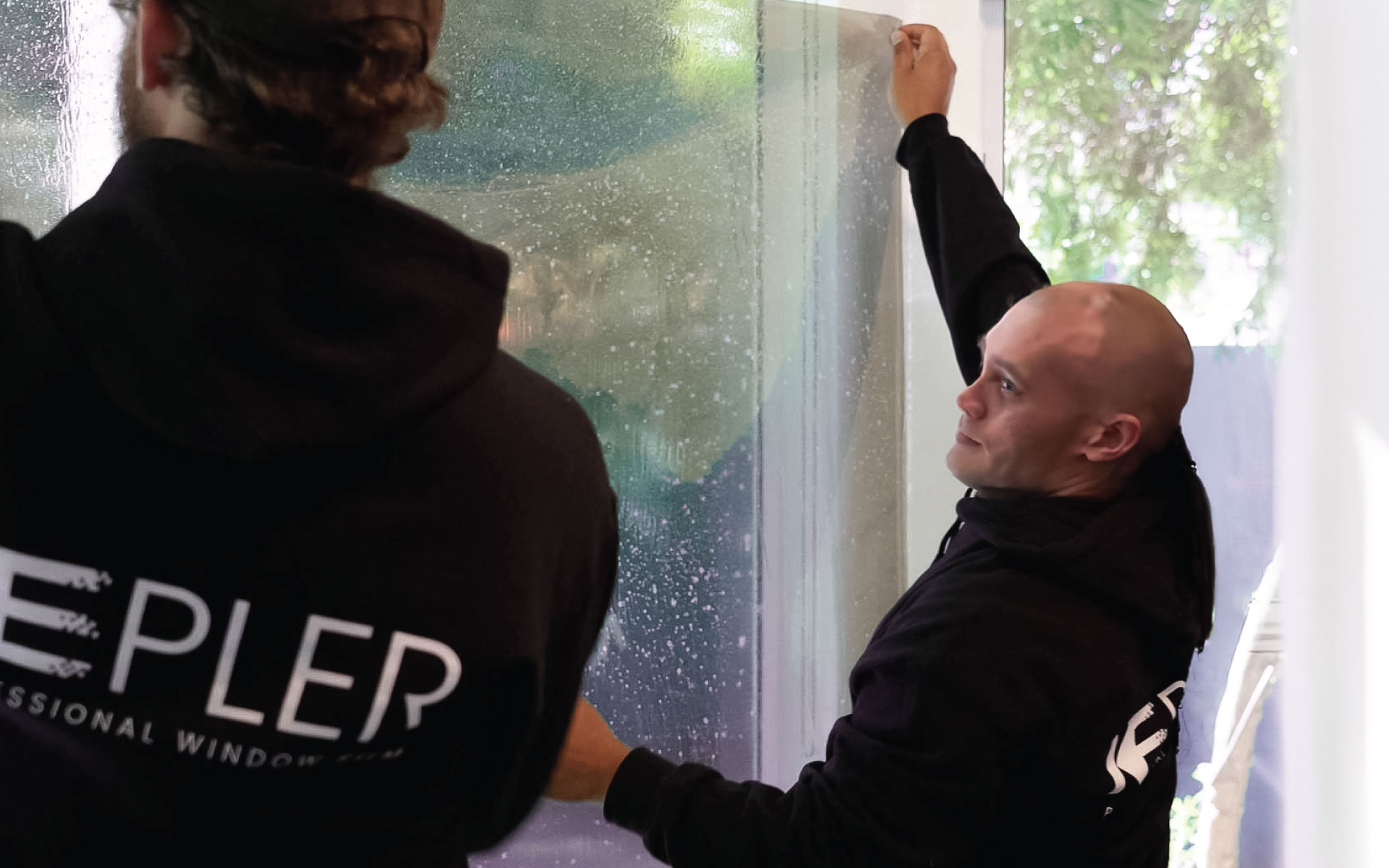
Beyond the Car
Tesla Owners
Kepler is a window film manufacturer. We make the film and supply it to independent tinting businesses, and those businesses quote for the work, fit it and deal with you as their own customer. That split is worth understanding when you compare tinting quotes in Georgia: the film specification comes from us, while the price, the timing and the workmanship are agreed directly with the dealer who does the job.
Ceramic film has its own Georgia page if you want to read about the range in more detail.
How Kepler works
Kepler makes the film, not the tint job. Independent tinting businesses install window film. For a project, ask a local tinter whether they carry Kepler film or can get it, then arrange the work directly with that shop.
Start your quote requestFilm availability and installation services vary by independent shop.
Kepler makes automotive and architectural window film, from everyday tint to nano-ceramic.
Independent tinting businesses install window film. Ask a local shop whether they carry Kepler film or can get it.
Share your project details, then ask an independent local tinter whether they carry Kepler film or can get it.
Driving with glass tinted past the legal limit is a misdemeanor in Georgia under O.C.G.A. 40-8-73.1, and the rule reaches out-of-state drivers on Georgia roads as well as residents. The same section makes it an offense for a business to install film that breaks the limit, so this is not something a tinter can quietly wave through. Putting a non-compliant car right also means paying to have the film stripped off and replaced, which is why the shade is worth settling before anything goes on the glass.
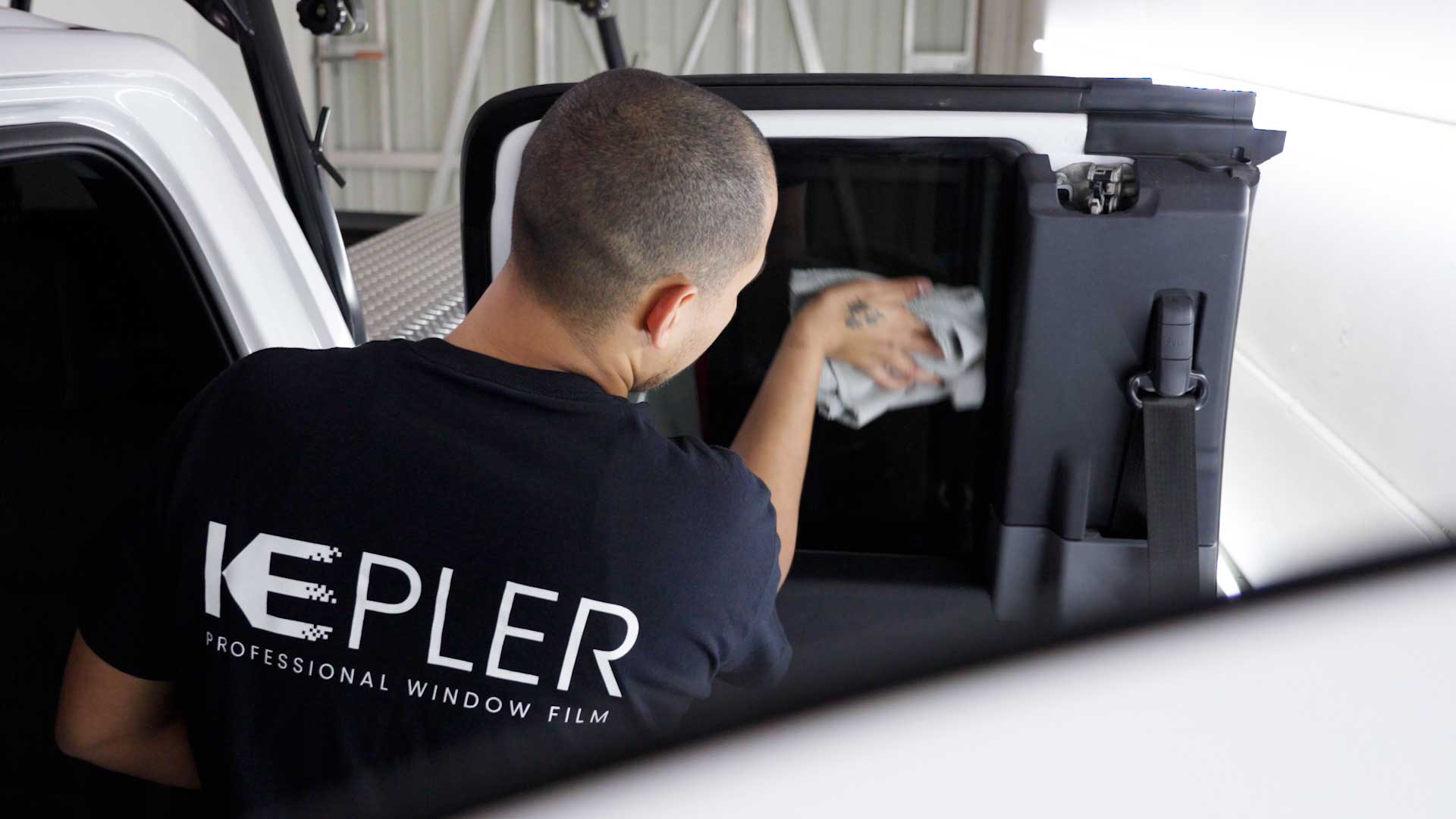
Ask a local tint shop whether they carry Kepler window film or can order it for your installation.
These Google listings are independent businesses. Contact each shop to confirm whether it installs Kepler film; appearing here does not mean it is a Kepler dealer.
Enter your town or ZIP code to find shops close to you.
Maps and business listings are provided by Google. Google Maps terms · Google privacy policy